Kensington Rune Stone Root Leaching Core Sample Testing By Scott F. Wolter P.G. August 2, 2018 Introduction
The Kensington Rune Stone is an artifact that was discovered in September of 1898 by a Swedish immigrant farmer named Olof Ohman on his property while clearing trees with his two oldest sons, Olof Jr., who was 12 years old at the time, and Edward, who was 10. After cutting off the roots around the base of a 25-30-year-old Aspen tree, according to six eye witnesses, they used a winch to bring the tree down.1 Still entangled within the root under the trunk was a 202-pound stone they discovered had a long inscription carved in Scandinavian runes. Controversial from the start, the inscription has long been considered a hoax with many accusing Olof Ohman of creating it. Some alleging he carved the inscription and placed it under the tree as part of a clever hoax. Geological, runological and historical research has generated voluminous data consistent with the artifact being an authentic Fourteenth Century artifact has dramatically undermined the hoax theories. The current testing was performed on the top portion of the core sample taken from the back side of the artifact and addresses the surmised root leaching believed to have produced the two white-colored, undulating and branching lineations present on the stone. Scholars have said the lineations were produced by active roots that pulled elements from minerals in the rock as food for the then young tree. The process reportedly involves an acid produced by the roots, and fungus in the soil that leaches and depletes the dark colored “pigment” elements, believed to be iron (Fe) and magnesium (Mg), thereby producing the white lineations where the roots were in contact with the stone. Methodology
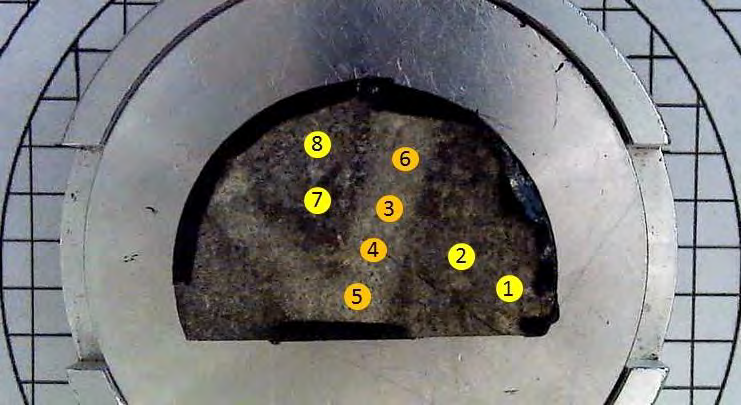
Scanning Electron Microscopy (SEM) was performed at Materials Engineering and Evaluation Inc. to document the overall quantity of various elements on the surface of the core sample. Four (4) locations were selected in the non-root leached (dark) areas and four (4) locations were selected in the root leached (white) areas. The bulk elemental data at all eight (8) locations was collected and interpreted upon completion of the examination.
1 Wolter/Nielsen, Pages 3-4, 2006.
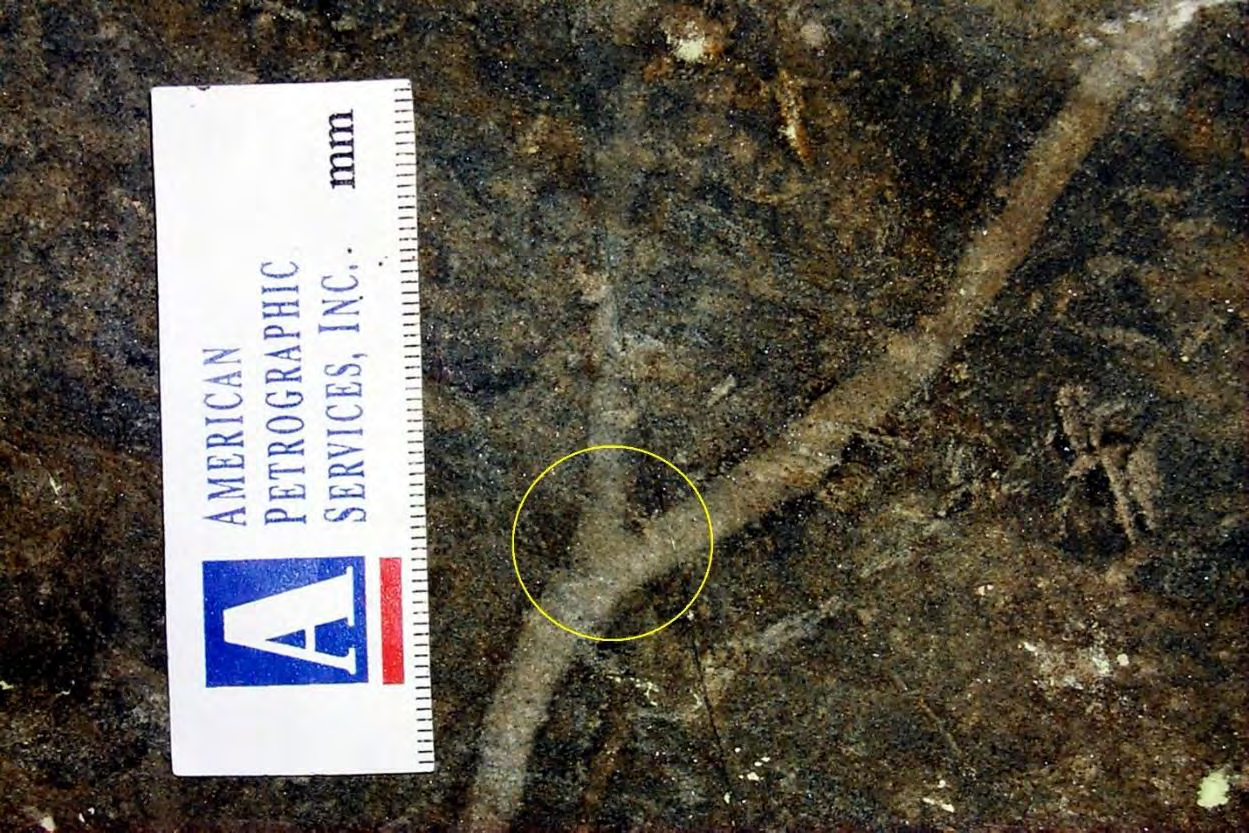
1 Background Information In 2000, the Kensington Rune Stone was brought to the laboratory of America Petrographic Services, Inc., where as part of the geological investigation a 1-1/4-inch diameter core sample was obtained from the back side of the artifact. The location of the core was chosen to include a joint fracture, a discontinuous crack and the white root leaching where it branched into two roots.
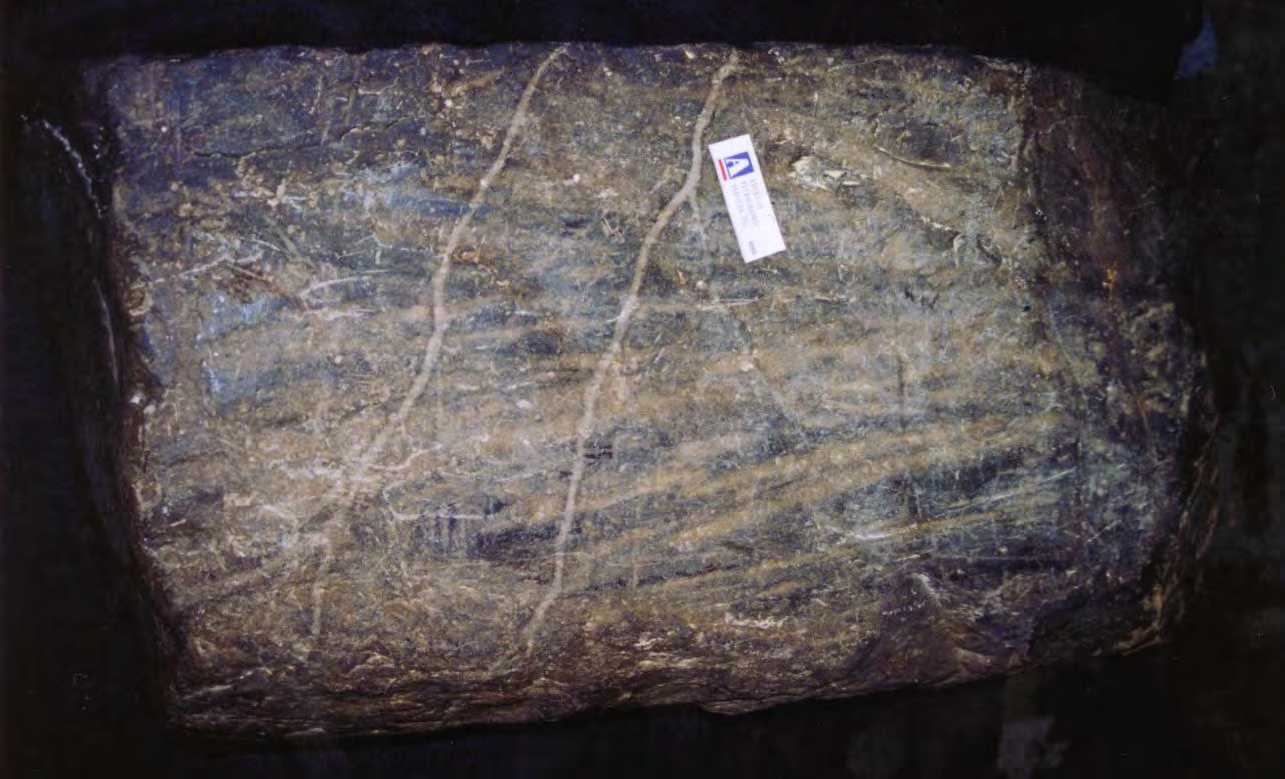
Figure 1: Two, white, roughly parallel, undulating and branching lineations trend across the glacially striated surface and down the glacial side of the stone. (Wolter, 2000)
2 Figure 2: Close-up of the area (circled in yellow) where the 1-1/2” dimeter core sample was obtained. (Wolter, 2000)
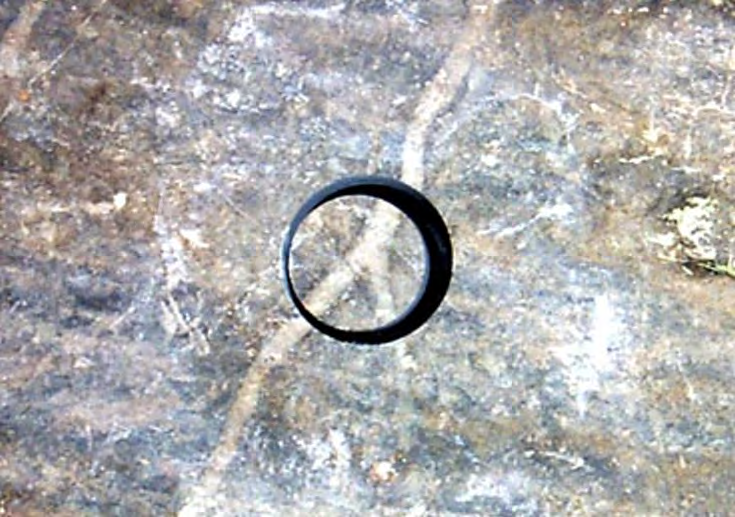
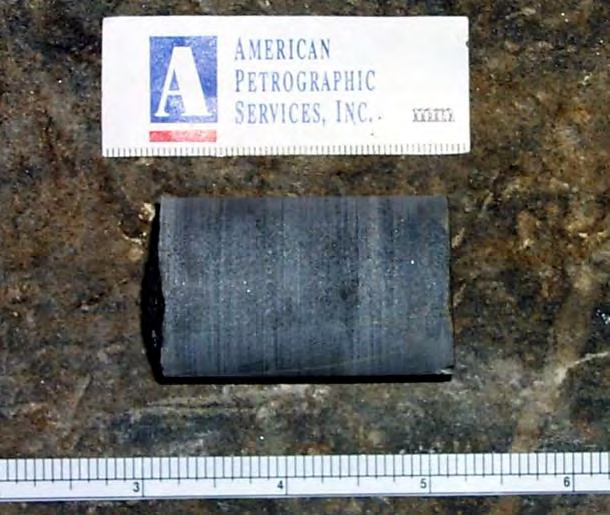
Figures 3 & 4: The white colored branching root leaching can be seen on the top of the core sample prior to removal (left). A side view of the core sample after extraction (right). (Wolter, 2000/2000)
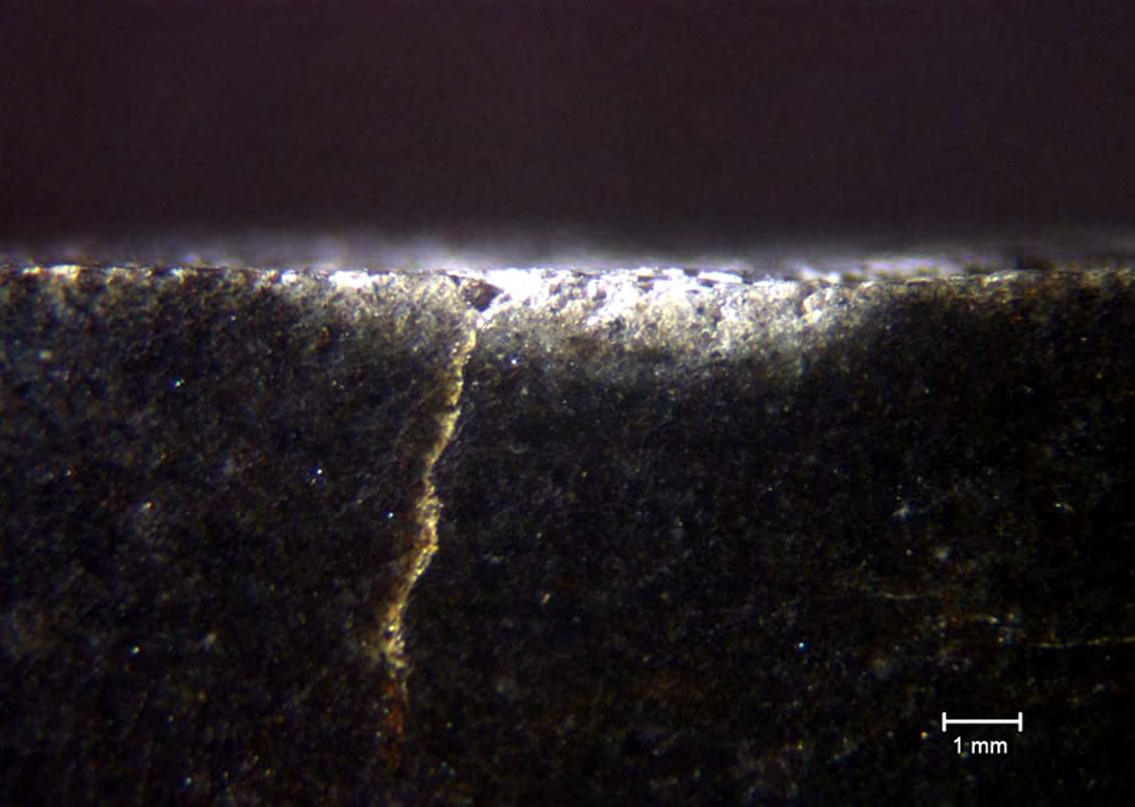
Once the core sample was extracted, the top ½” was cut off and another cut was made perpendicular to the top of the core creating a cross-sectional view of the root leaching. In cross-section, the white root leaching extended a maximum of 1.5 mm into the metagraywacke and tapered in depth closer to the edges of approximately ½” wide lineation on the surface.
3 This confirms the white lineations are not a geological feature of the metagraywacke and were created by a chemical reaction that cause the color change starting at the surface and then propagating to the maximum 1.5 mm depth.
Figure 5: A cross-sectional view of the top of the core sample shows the white root-leaching extends a maximum depth of roughly 1.5 mm and shallows toward the edges. A yellowish fracture runs running sub-vertically from the top surface is unrelated to the white lineation (5X). (Wolter, 2000)
It has long been believed the white lineations were created by contact with roots of the tree the artifact was entangled within. Those roots were described by witnesses at the time as being 3” wide and flattened from prolonged contact with the stone.2 Plant physiologists and soil scientists explained the white lineations were created by the combination of a fungus present in the soil and acid produced by young roots actively leaching various elements as nutrients from the soil and rock as food for the tree. As the tree grows, the root system expands and a bark forms and the active part of the root moves on. Based on the white root leaching scars present on the back side of the stone the bark began to form around the roots when they were one-half wide during the early life of the tree. The reason the root leaching is believed to be connected to same tree Olof Ohman and his two sons discovered the artifact under, and not a tree at some time in the distant past, is due to the
2 Wolter/Nielsen, Page 30, 2006.
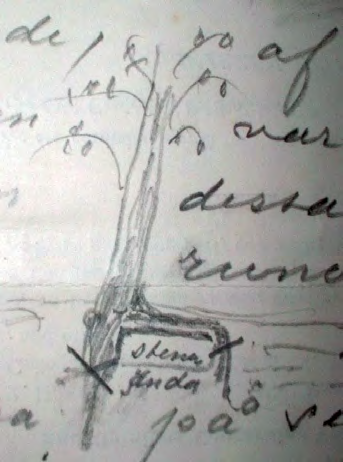
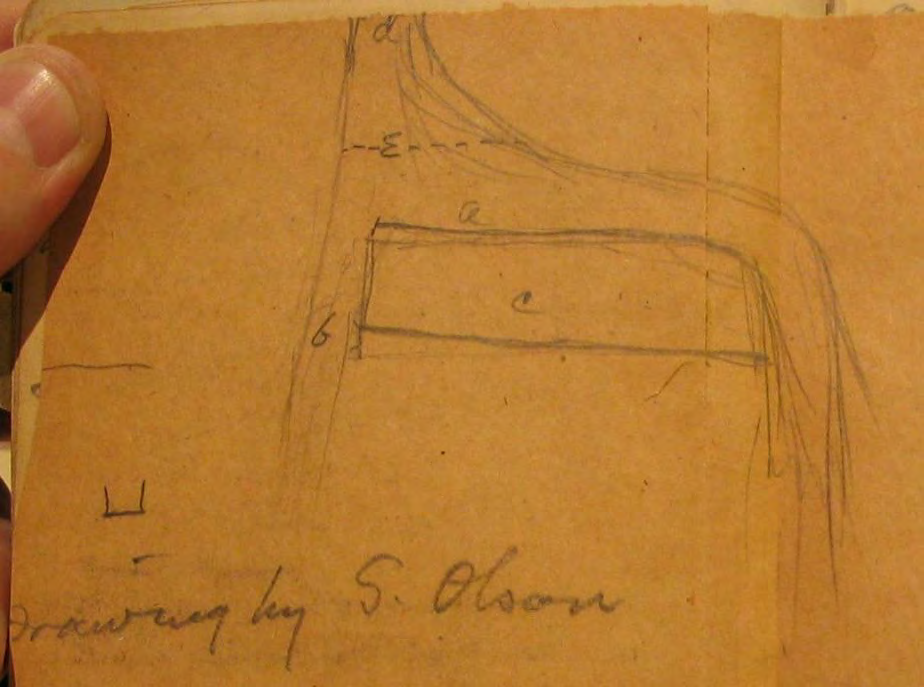
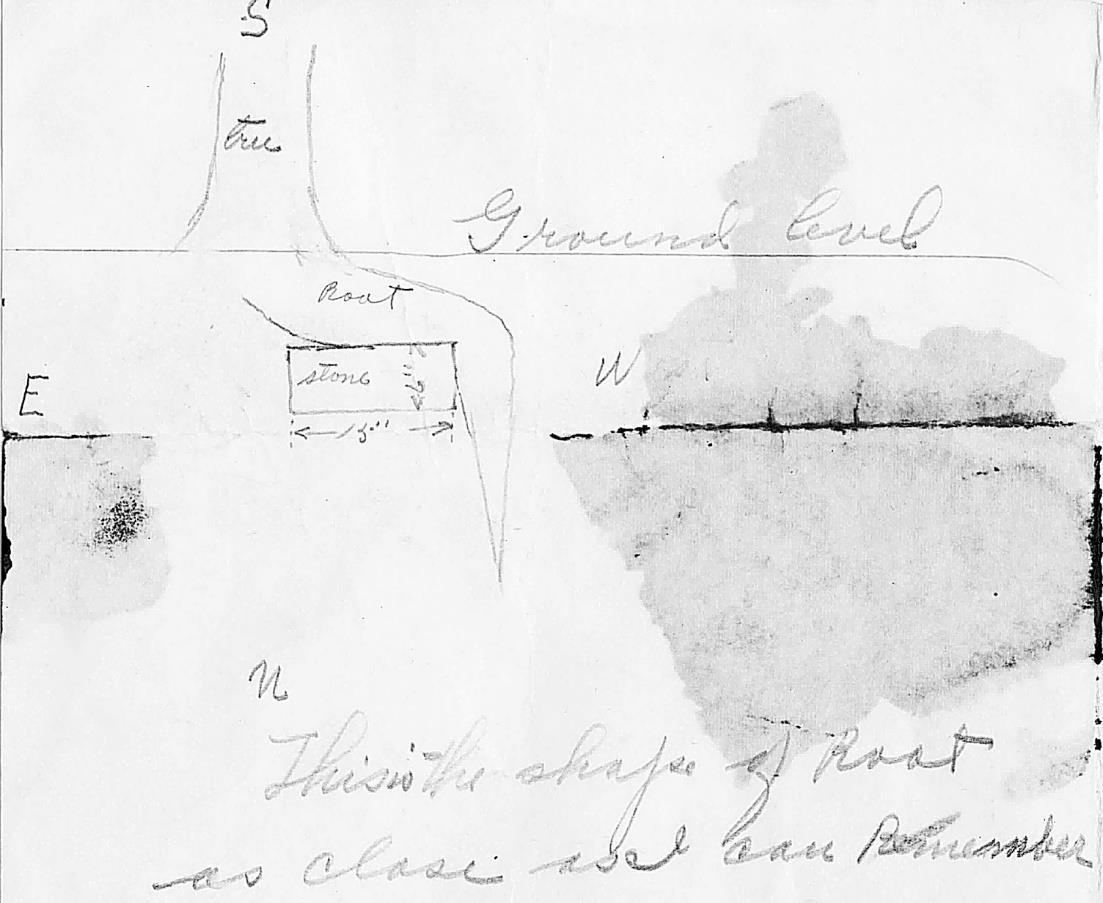
4 fact the pattern of the root leaching matches the first-hand witness testimony and the three sketches of the roots and the stone made by Olof Ohman, Sam Olson, and Olof Ohman Jr.
Figures 6 & 7: Olof Ohman made this sketch on December 9, 1909, (left) and his neighbor Sam Olson made his drawing in March of 1910 (right). Both drawing show the main root of the tree extending straight down into the ground along the split side of the stone with the inscription side down. The secondary roots are shown extending across the back side of the stone and then down the far side and match the white lineations still present on the back of the Kensington Rune Stone. (Minnesota Historical Society)
5 Figure 8: Olof Ohman Jr. made this sketch in a letter to his brothers Arthur and John on April 2, 1957. This sketch roughly matches and is consistent with the sketches his father and Sam Olson drew nearly half a century earlier. (Courtesy of the Ohman Family)
To generate scientific data to support the supposition of the white lineations present on the back side of the Kensington Rune Stone elemental analysis using a scanning electron microscope (SEM) on the top surface was performed by Ryan Haase at Materials Evaluation and Engineering, Inc., on July 30, 2018. The analysis was performed on a total of eight (8) locations on the top surface of the core, four in the dark areas and numbered 1, 2, 7 and 8, and four in the white areas 3, 4, 5 and 6. The Runestone Museum in Alexandria, Minnesota, was kind enough to make the core sample available for testing.
6 Figure 9: This picture is the top surface of the core sample on the platform placed into the scanning electron microscope (SEM) for analysis. Elemental scans were performed in eight locations, four in the dark areas (1, 2, 7 and 8) and four in the white areas (3, 4, 5 and 6).
Test Results
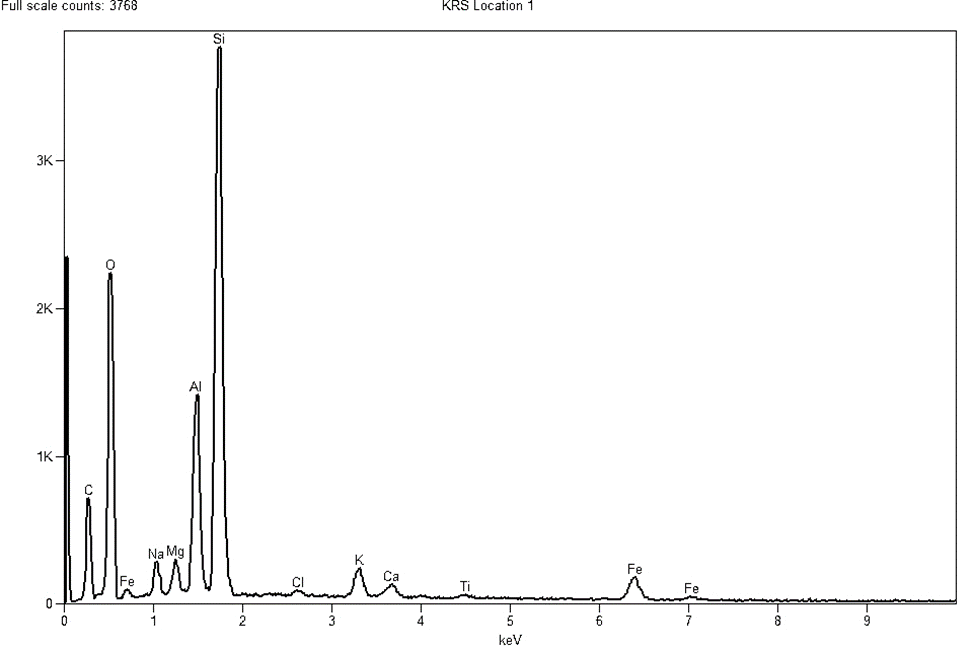
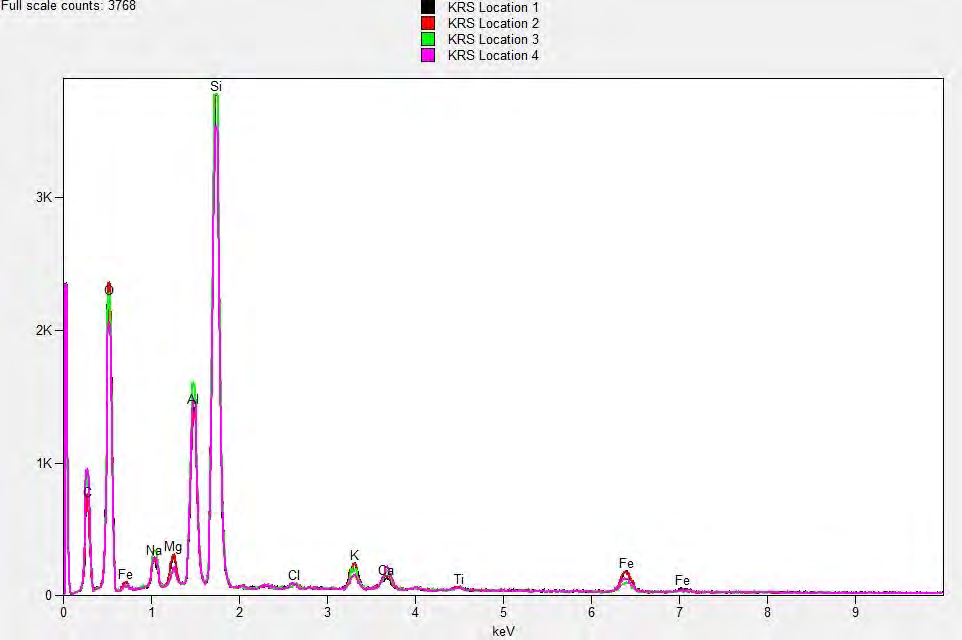
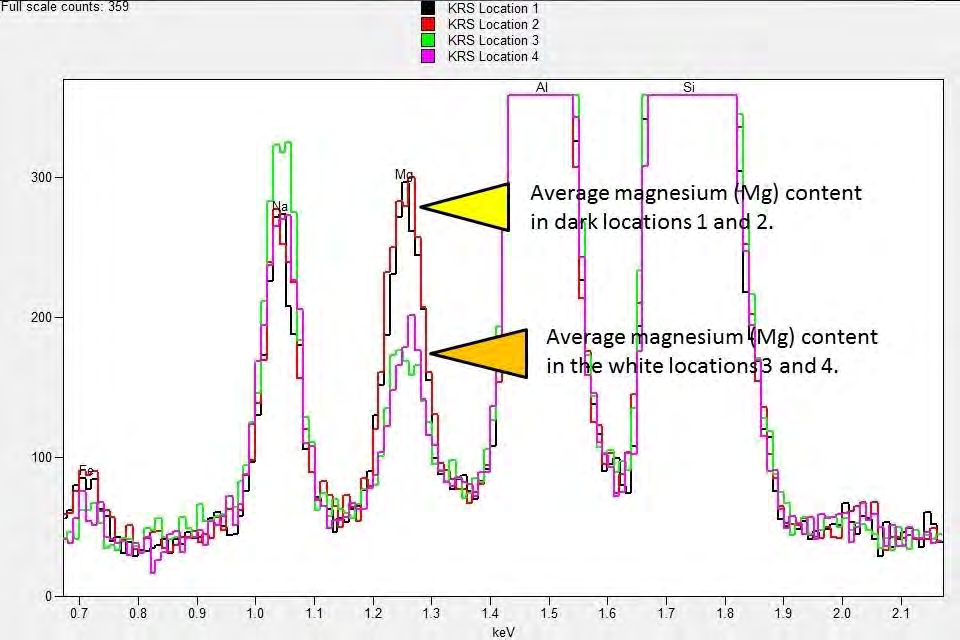
The results of the scans produced the following elements present at all eight locations: carbon (C), oxygen (O), iron (Fe), sodium (Na), magnesium (Mg), aluminum (Al), silicon (Si), chlorine (Cl), potassium (K), calcium (Ca) and titanium (Ti). The elements that produce dark color within the minerals that make up the rock, such as biotite, hematite, magnetite and pyrite, are iron and magnesium.3 The overall scan shows a general trend of consistency in the relative quantities of all eleven elements. However, close examination of the scans shows noticeable anomalies in the quantities of iron and magnesium. According to plant physiologist Dr. Paul Syltie, Ph.D., “The soil releases its stored elements, from exchangeable and non-exchangeable sites on clay (micas) or organic matter, to root hairs or to microorganisms that extract the nutrients and move them to the roots. …the micronutrients zinc (Zn), copper (Cu), iron (Fe) and magnesium (Mn) act in part as enzyme cofactors (to make enzymes work) … Magnesium comprises the core of chlorophyll, the light energy trapping compound.” 4 All four areas tested
3 Wolter/Nielsen, Page 30, 2006. 4 Syltie, Paul, Ph.D., Page 11, 2003.
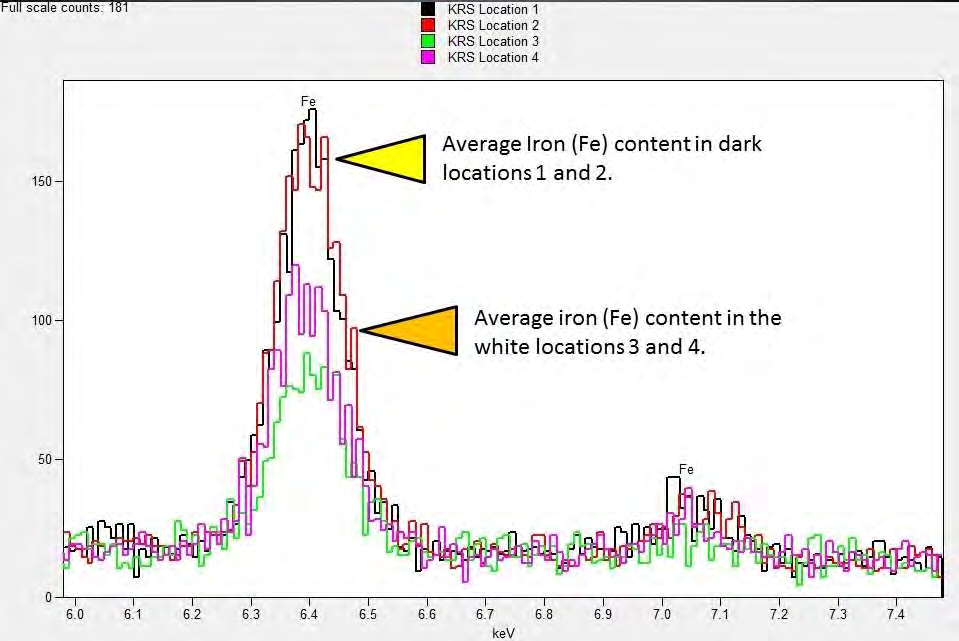
7 in the white areas had a lesser amount of iron and magnesium when compared to the four dark areas.
Figure 10: The bulk elemental scan of location 1 shows the elements carbon (C), oxygen (O), iron (Fe), sodium (Na), magnesium (Mg), aluminum (Al), silicon (Si), chlorine (Cl), potassium (K), calcium (Ca) and titanium (Ti).
8 Figure 11: A composite of the bulk elemental scans of locations 1, 2, 3 and 4, show very similar quantities of the various elements. Closer inspection of the iron and magnesium peaks show a noticeable trend.
Figure 12: A magnified view of the bulk elemental scans for iron (Fe) at locations 1, 2, 3 and 4, show a clear difference of a higher overall iron content in the dark locations verses the white (root leached) locations.
9 Figure 13: A magnified view of the bulk elemental scans for magnesium (Mg) at locations 1, 2, 3 and 4, show a clear difference of a higher overall magnesium content in the white locations verses the dark locations.
Conclusions These results are consistent with the thesis of the depletion of the “pigment” elements iron and magnesium due to chemical leaching of young roots in contact with the stone which produced the white, undulating and branching lineations on the back side of the Kensington Rune Stone. Based on the testimony of multiple first-hand witnesses the average age of the tree was 25 to 30 years old. Since the root leaching occurred during the early life of tree (less than five years), it proves the tree was in contact with stone for the full life of tree. Therefore, since Olof Ohman didn’t immigrate to the United States until 1879, nineteen years prior to the discovery of the artifact in 1898, these test results serve as additional evidence that he could not have been involved in its creation.5
5 Wolter/Nielsen, Page 390, 2006.
10 References Syltie, Paul, Ph.D., How Soils Work: A Study into the God-Plane Mutualism of Soils and Crops, Paul Syltie, Ph.D., 2003.
Wolter, Scott F. and Richard Nielson, The Kensington Rune Stone: Compelling New Evidence, Lake Superior Agate Publishing, Chanhassen, Minnesota, 2006.
11